

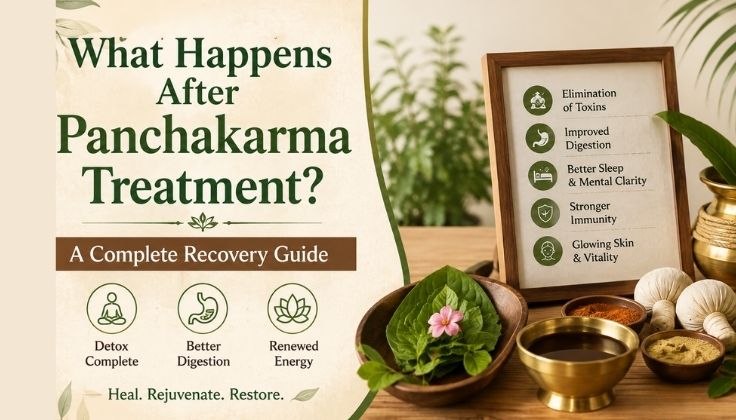
Completing Panchakarma does not mean the wellness journey ends when the final procedure is over. The period that follows is an important part of the overall treatment process. Diet, rest, daily routine, follow-up care, and gradual return to normal activities can all influence how comfortably a person transitions after treatment.
If you are considering Panchakarma Treatment in Dubai, it is worth understanding what happens after the main therapies. Post-treatment care is not simply about getting back to your usual routine as quickly as possible. In Ayurveda, recovery is approached gradually, with attention to digestion, strength, lifestyle, and individual needs.
The first phase after Panchakarma is generally focused on rest, observation, appropriate food, and following the practitioner's instructions.
Panchakarma procedures are traditionally understood as a sequence involving preparation, the principal procedure, and post-treatment care. The Ministry of AYUSH's Ayusoft resource also describes Panchakarma procedures in relation to Poorvakarma, Pradhanakarma, and Paschatkarma.
You may be advised to:
The exact recovery plan should be individualised. Panchakarma is not a one-size-fits-all treatment, so the post-treatment routine can vary according to the procedure performed, the person's condition, and the practitioner's assessment.
One of the key concepts associated with post-Panchakarma care is the gradual restoration of digestive capacity.
After certain cleansing procedures, Ayurveda traditionally recommends a graduated dietary regimen known as Samsarjana Krama. The Ministry of AYUSH describes this as a gradual dietary progression intended to restore normal Agni following procedures in which digestive function may be temporarily diminished.
This is why immediately returning to heavy meals, irregular eating, or an intense lifestyle may not be appropriate for everyone.
The goal is to give the body time to transition.
What Should You Eat After Panchakarma?
Food is an important part of the recovery period.
Rather than following a universal "Panchakarma diet", your practitioner may recommend foods based on your treatment, digestive capacity, constitution, and current condition.
A practitioner may recommend light, freshly prepared foods during the initial recovery stage.
Traditional post-treatment dietary approaches can include preparations such as rice gruel and other simple foods. The Ministry of AYUSH describes Manda, a light rice-gruel preparation, as part of sequential dietary advice used after Panchakarma to support restoration of normal digestive function.
Depending on individual advice, the diet may gradually progress towards:
The progression should not be rushed. Your Ayurvedic practitioner can determine when you are ready to move from one stage to the next.
During the early recovery period, practitioners may advise avoiding foods that are difficult to digest or that do not fit the prescribed recovery plan.
These may include:
The important point is not to create an unnecessarily restrictive diet. Instead, follow the food recommendations provided by your practitioner for your specific ayurvedic treatment.
A recovery diet should be practical enough for you to follow consistently.
Rest is another important part of recovery.
You may feel different from your usual self immediately after treatment. Some people may experience temporary tiredness, while others may feel ready to return to normal activities relatively quickly.
There is no universal recovery timeline.
Your practitioner may recommend reducing demanding physical activity and allowing adequate sleep during the initial period. The aim is to give your body time to settle before returning to a more demanding routine.
This is particularly relevant if your Panchakarma programme involved intensive procedures.
Exercise should generally be reintroduced gradually rather than immediately returning to your previous training intensity.
During the early recovery stage, gentle movement may be more appropriate than strenuous workouts, depending on the practitioner's advice.
Consider a gradual progression:
Recovery → gentle movement → normal daily activity → regular exercise
The pace should depend on how you feel and what your practitioner recommends.
If you experience unusual weakness, dizziness, persistent vomiting, significant dehydration, severe pain, fainting, or other concerning symptoms, seek appropriate medical attention rather than attempting to manage the symptoms through self-care alone.
This depends on your treatment and your overall condition.
If your work involves sitting at a desk and you feel well, returning may be easier than returning to physically demanding work. However, the first few days may be better used for rest if your practitioner recommends it.
For people undergoing Panchakarma Treatment in Dubai, planning some flexibility around the treatment period can make the recovery phase easier.
Instead of scheduling intensive work commitments immediately after treatment, allow some breathing room where possible.
A stable daily routine can help make the transition back to everyday life smoother.
Focus on simple habits such as:
The purpose is not to create a complicated lifestyle plan. Consistency matters more than perfection.
Not everyone requires the same medicines after treatment.
Depending on the individual's condition and treatment plan, an Ayurvedic physician may prescribe medicines, dietary recommendations, or other supportive measures.
Do not start, stop, or change Ayurvedic medicines without professional guidance, particularly if you are also taking conventional medicines.
A qualified practitioner should consider your complete health history and current medication before recommending treatment or supplements.
Follow-up allows the practitioner to assess how you are progressing after treatment.
During a follow-up, they may discuss:
Follow-up is especially useful when Panchakarma was undertaken as part of a broader treatment plan rather than simply as a wellness experience.
Official AYUSH resources also emphasise clinical monitoring and appropriate management around Panchakarma procedures, reinforcing that these therapies should be approached as structured healthcare interventions rather than casual self-care treatments.
There is no single recovery period that applies to everyone.
The duration can depend on:
Some people may resume normal routines relatively soon, while others may require a more gradual transition.
This is one reason it is better to ask your practitioner for a personalised recovery plan rather than relying on a fixed number of days found online.
A few simple precautions can make the transition easier.
Do not immediately fill your schedule with demanding work, intense exercise, travel, and social commitments.
Post-Panchakarma care does not mean starving yourself or following an unnecessarily restrictive diet.
Do not assume that another person's Panchakarma medicines or dietary plan will suit you.
If you develop severe or persistent symptoms after treatment, contact your healthcare provider. Panchakarma should be performed under appropriate professional supervision.
A practical recovery plan can be thought of in four stages:
|
Recovery stage |
Main focus |
|
Immediately after treatment |
Rest, observation and practitioner-directed care |
|
Early recovery |
Light, appropriate food and reduced physical strain |
|
Transition |
Gradual return to normal meals and daily activities |
|
Long-term maintenance |
Sustainable diet, sleep, activity and follow-up |
This framework is only a general guide. The actual plan should be based on the treatment received and individual assessment.
Recovery becomes easier when you plan for it before starting Panchakarma.
Before beginning treatment, ask your practitioner:
Having these answers beforehand allows you to organise work, meals, transportation, and other commitments around the recovery period.
If you are looking for an ayurvedic hospital in dubai, do not evaluate a facility only by the number of therapies it offers.
Look at the overall treatment experience.
Consider whether the facility provides:
A professional approach matters because Panchakarma involves specific procedures that should be selected and administered according to the individual's needs.
Panchakarma recovery is a gradual process rather than a single moment after the final therapy. Rest, appropriate food, digestive care, sleep, gradual activity, and follow-up can all form part of the post-treatment plan.
A key traditional concept is Samsarjana Krama, a graduated dietary approach used after certain cleansing procedures to help restore digestive function.
If you are considering Panchakarma Treatment in Dubai, ask about the recovery plan before beginning treatment. Knowing what to expect after Panchakarma can help you make better arrangements and follow your practitioner's recommendations with greater confidence.
Most importantly, avoid treating an online recovery guide as a substitute for individual medical advice. Panchakarma should be planned and supervised by a qualified Ayurvedic professional, particularly when it is being undertaken for a health condition or alongside other medical treatments.


