

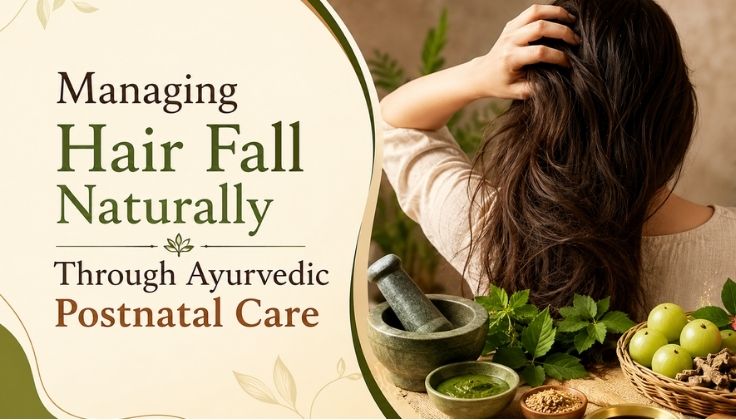
Hair fall after childbirth can be distressing, especially when it appears suddenly. Finding more hair on your pillow, comb, or shower drain is common during the months following delivery. In most cases, postpartum hair shedding is temporary and occurs because hormonal changes after pregnancy affect the natural hair-growth cycle.
Postnatal Care can support this transition through nourishing food, adequate rest, gentle hair care, and personalised Ayurvedic practices. Rather than treating hair fall as an isolated problem, Ayurveda takes a broader approach that considers the mother's overall recovery and wellbeing.
During pregnancy, hormonal changes can keep more hairs in the active growth phase for longer. After delivery, hormone levels change, causing more hairs to enter the resting and shedding phase.
This can make hair fall appear much heavier than usual. Shedding often becomes noticeable a few months after childbirth and gradually decreases as the hair-growth cycle returns to its usual pattern.
However, persistent or patchy hair loss should not automatically be considered normal postpartum shedding. Nutritional deficiencies, thyroid problems, stress, and other conditions can also contribute to hair loss. Professional assessment is advisable when shedding is unusually severe or does not improve over time.
Ayurveda traditionally considers the postpartum period a time when the mother's body needs nourishment, rest, and gentle care. Hair health is therefore approached as part of overall postnatal wellbeing.
An Ayurvedic approach may focus on:
The aim is not to promise immediate hair regrowth. Instead, the focus is on supporting the mother's recovery while allowing the natural hair cycle to stabilise.
After childbirth, mothers often spend so much time caring for their baby that their own meals become an afterthought. Skipping meals or relying heavily on convenient foods can make maintaining good nutrition difficult.
A balanced postnatal diet should provide adequate protein, iron, healthy fats, vitamins, and minerals. Include a variety of foods such as lentils, beans, vegetables, whole grains, nuts, seeds, dairy or suitable alternatives, and other protein-rich foods.
Hydration is equally important, particularly for breastfeeding mothers.
If hair fall is accompanied by unusual tiredness, weakness, or other symptoms, do not assume that diet alone will solve the problem. A healthcare professional can assess whether nutritional deficiencies or another underlying issue may be contributing to the shedding.
Postpartum hair does not need an elaborate routine. In fact, excessive styling can make the situation worse by increasing breakage.
Avoid pulling the hair tightly into ponytails, buns, or braids. Reduce frequent use of straighteners, curling irons, and high-heat dryers. Detangle hair gently, especially when it is wet, and avoid aggressive brushing.
A simple routine can include:
The objective is to protect the existing hair while the natural growth cycle recovers.
Oil massage is a traditional component of Ayurvedic self-care. A gentle scalp massage can also provide a calming break during a busy postpartum day.
It is important, however, not to view oil massage as a guaranteed ayurvedic treatment for postpartum hair loss. Typical postpartum shedding is largely associated with hormonal changes, and the hair cycle generally needs time to normalise.
If you wish to use Ayurvedic oils or herbal preparations, professional guidance is recommended. This is particularly important during breastfeeding, or if you have allergies, sensitive skin, or an existing scalp condition.
The appropriate oil, frequency, and method should be selected according to individual needs rather than copied from a generic remedy.
Sleep can be difficult when caring for a newborn, but rest remains an important part of postnatal recovery. Physical exhaustion and ongoing stress can affect overall wellbeing and may also influence the hair-growth cycle.
You do not need to follow a perfect wellness routine. Small changes can make a difference. Accept help with household responsibilities when available, take short breaks, and use quiet moments to relax.
Ayurvedic postnatal care may incorporate suitable relaxation practices and traditional therapies to help mothers create a more balanced daily routine.
Increased hair shedding can make new mothers search for quick solutions. It is tempting to combine different oils, supplements, shampoos, masks, and treatments.
However, more products do not necessarily mean better results. Constantly changing your routine can also irritate the scalp or make it difficult to identify what works for you.
For typical postpartum shedding, patience is important. Hair recovery takes time. Focus on consistent nutrition, gentle hair care, rest, and appropriate professional guidance rather than expecting overnight changes.
Postpartum hair shedding is common, but certain signs deserve attention.
Consult a healthcare professional if you notice:
A professional can help determine whether the hair loss is typical postpartum shedding or whether another factor needs investigation.
Every mother's recovery is different. A routine that suits one woman may not be appropriate for another. Personalised guidance can therefore be more useful than following general advice online.
An ayurveda clinic in Dubai can offer consultation and personalised Ayurvedic postnatal wellness support. A qualified practitioner can consider the mother's postpartum stage, lifestyle, dietary needs, overall condition, and breastfeeding status before recommending suitable practices.
This is particularly useful when considering Ayurvedic oils, herbal preparations, or specialised therapies. Professional guidance helps ensure that postnatal care remains appropriate and focused on the mother's individual needs.
A practical routine does not have to add more pressure to an already demanding day.
Morning: Begin with water and a nourishing breakfast.
During the day: Eat balanced meals, stay hydrated, and rest whenever possible.
Hair care: Keep the scalp clean, handle hair gently, and avoid tight hairstyles.
Relaxation: Take a few minutes for quiet breathing, relaxation, or an appropriate traditional massage practice.
Professional care: Seek personalised guidance if you want to include Ayurvedic therapies or herbal preparations.
The goal is consistency, not perfection.
Postpartum hair fall is often a temporary response to hormonal changes after childbirth. Supporting the body during this period is more valuable than searching for an instant solution.
A supportive approach includes:
Ayurvedic postnatal care is ultimately about caring for the mother as a whole. With nourishment, gentle routines, rest, patience, and personalised support, hair care can become a natural part of a healthier postpartum recovery


