

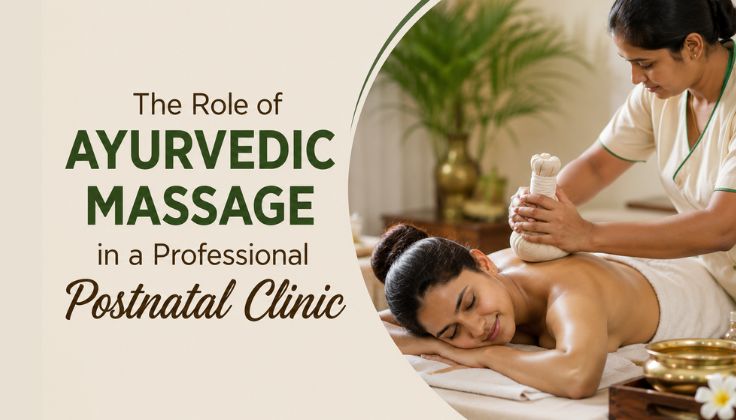
For every woman, the journey of embracing motherhood can be described as one of the most joyfully stressful phases of her life. The postpartum period, which is also referred to as the “forth trimester" is a substantive chapter where the mother goes through a plethora of physiological, psychological and emotional changes. In a traditional post-natal clinical environment, the primary objective is centered around clinical monitoring and wound healing for the mother and all-inclusive infant wellness for the newborn. However, in recent years, holistic treatment methodologies have found its way into the domain of post-pregnancy care, especially the ayurvedic massage, also known as “Abhyanga” is being widely recognized as an integral part of comprehensive maternity care and recovery.
In this blog, Ayurheritage, an ayurvedic wellness centre situated in Dubai, will explain the role of Ayurvedic Massage in a professional postnatal clinic.
According to the principles of Ayurveda, childbirth is referred to as the process that intensifies and exacerbates the Vata Dosha, which is known as the energy of movement and is responsible for the communication between the nervous system and the brain, breathing, blinking and heartbeat. It is also associated with the movement of muscles and tissues and also blood circulation and elimination of waste. After childbirth, the sudden physical emptiness that occurs in the pelvic cavity coupled with sleepless nights and hormonal changes results in an internal imbalance. A committed and dedicated holistic healing centre employs customized ayurvedic massages as a restorative practice to calm down and pacify this sudden burst of energy, thereby expediting the recovery process through proven, time tested healing methodologies.
From a purely physiological perspective, applying warm herbal oils during a postnatal massage yields a therapeutic effect. During pregnancy and labour, the soft tissues, muscles and joints have to go through immense pain and pressure, hence, they are prioritized and systematically targeted to mitigate imbedded physical tension and muscle exhaustion.
The slow, rhythmic and deliberate strokes applied by professional therapists to awaken the lymphatic system, which is crucial to boost the alleviation of postpartum edema and foster the elimination of toxic metabolic waste.
This is a soothing abdominal massage that requires a specialist to perform. It plays a vital role in uterine involution, the process by which the uterus returns to its original, pre-pregnancy size.
By lubricating the joints, this therapy reinforces the structural integrity of the pelvic floor and the lower back. This is integral to reduce the musculoskeletal aches that are triggered by the relaxin hormone. This hormone stays elevated for weeks even after delivery.
The benefits of an ayurvedic massage goes beyond the realm of physical wellness and rejuvenation. It has a very positive impact on the nervous system. The postpartum phase is frequently marked by excess hormonal depletion which can lead to postpartum anxiety, baby blues and promote high levels of stress.
During an Abhyanga session, the continuous stimulation of the skin, which is the largest organ of the human body, leads to the release of endorphins and oxytocin, while reducing cortisol levels simultaneously. This neuroendocrine shift gives rise to a state of deep relaxation and calmness, causing the sympathetic nervous system to relax and disengage. Moreover, the sleep quality transforms profoundly, and the physiological and psychological resilience required to embrace the challenges of motherhood gets cemented. For mothers who are navigating lactation challenges, the deep stress reduction and relief facilitated by the massage pacifies the nervous system and positively influences milk production, paving the way for a smooth and optimized breastfeeding experience.
In a professional postnatal ayurvedic clinic in Dubai, an ayurvedic massage is not perceived as a normal spa luxury, instead it is viewed as a clinical therapy that is personalized and aligns with the individual’s specific delivery history and unique body constitution. Before any treatment protocol is followed, a rigorous and comprehensive examination is conducted to ensure clinical safety and therapeutic value.
The optimal start window and the primary focus of the postpartum therapy completely depends on the individual’s body type. Following a vaginal delivery, therapy usually begins 7 to 10 postpartum, with emphasis on full body rejuvenation, pelvic stabilization and abdominal toning to support the body to recalibrate and revitalize itself. On the other hand, a cesarean delivery requires 4 to 6 weeks postpartum to make sure that the incision has healed completely. For these mothers, initial sessions mainly focus on relieving body pain and easing spinal strain and lower back pressure, while also on the limbs and shoulders, and targeted scar tissue therapy will also be introduced in the later stages of recovery.
Moreover, the selection of oils is carefully calibrated. Traditional oils such as Dhanwantharam Thailam or Bala Thailam are frequently employed by professional ayurvedic practitioners due to their nourishing and anti-inflammatory qualities. These oils are enriched and infused with specific herbs that are designed to strengthen the body tissues by penetrating through the epidermal layers.
The inclusion of Ayurvedic massage in professional postnatal clinics seamlessly closes the gap between traditional treatments and holistic therapies. By addressing and acknowledging the physical stress associated with labour and honoring the need for care and rest, this therapeutic method ensures that the mother is as deeply cared for as her newborn. At the end of the day, an ayurvedic massage serves as the restorative anchor of vitality and rejuvenation that empower women to effortlessly navigate the challenges and vulnerabilities in the initial stages of motherhood with physical resilience and psychological harmony.


